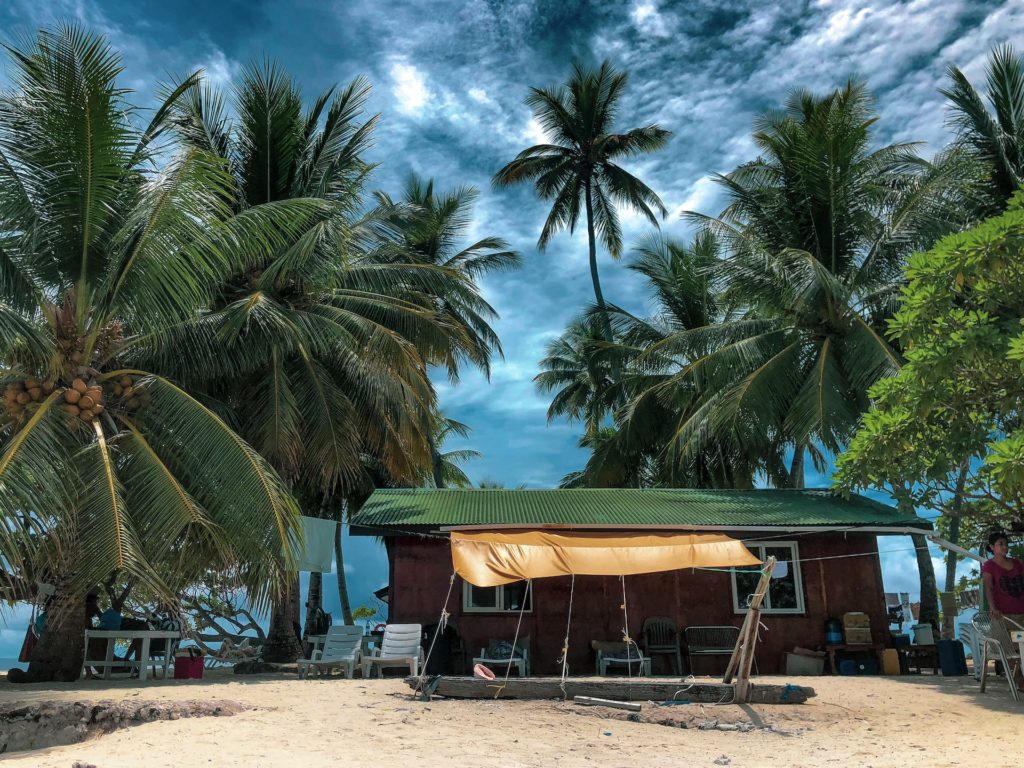
The Federated States of Micronesia (FSM) is a low-income island nation with 105,544 people living on 607 islands with a total land area of 271 square miles and an exclusive economic zone (EEZ) of more than one million square miles (2.6 million square kilometers) in a remote part of the Western Pacific Ocean. Under a weak national authority, the country is made up of formerly unconnected cultures and languages arranged into four states. The FSM is part of the former United States-administered Pacific Islands Trust Territory, which won independence in 1986. Since its independence, the United States has provided about USD100 million yearly to the Federated States of Micronesia (FSM), which operates under a Compact of Free Association (Compact) with the United States.
The money is used for development by the FSM, which is administered by the US Department of Interior’s Office of Insular Affairs. (DOI) According to the World Bank, the FSM’s 2017 Gross Domestic Income (GDI) per person was $3,187, indicating no growth over the previous ten years. The country’s official currency is the US dollar.
In the Federated States of Micronesia, commercial fishing remained the most important industry. The sale of fishing rights (about USD72.5 million in 2017) and levies on offshore corporation registrations for captive insurance were its main sources of revenue (USD86 million in 2018). Except in larger towns, where the economy was concentrated on government jobs and a tiny commercial sector, it remained primarily a subsistence economy. Government salaries are paid with Compact funds (70 percent of employed adults work in the public sector) and, to a lesser extent, family remittances and Social Security benefits paid to FSM citizens who previously worked in the US or are the surviving spouse of an American citizen fueled the cash economy.
In 2023, the FSM will use revenues from a trust fund established through U.S. payments over 20 years to replace direct financing in the form of sector awards. FSM has established its trust fund, with USD75 million in donations from FSM profits to the FSM trust fund in 2018, up significantly from previous years.
At constant prices, the FSM GDP in 2017 was USD336.4 million, up 2.25 percent from 2016. In the same year, the economy had a trade deficit of USD125 million in goods and services. The FSM government debt was low, but international development banks classified the country as a grant-only client, concerned about the country’s ability to repay loans, due to a lack of emphasis on fiscal revenue to supplement Compact funds, the Pacific’s lowest tax-to-GDP ratio, and the projected reductions in Compact funding in 2023.
There was no bilateral investment or taxation agreement between the United States and the Federated States of Micronesia. The only appropriate guideline was the 2003 Amended Compact of Free Association, with supplementary material available online. Articles imported from the United States into the FSM were guaranteed to be treated equally to those imported from any other foreign country under this pact. With a few exclusions stated in Article IV, Section 242 of the Compact, articles exported from the FSM to the United States were duty-free.
The Pacific Island Countries Trade Agreement (PICTA) was signed by the FSM, however, it was never ratified. PICTA was a free trade agreement for products between 14 Pacific Islands Forum members. (New Zealand and Australia are not included.) In 2001, it was signed. PICTA has been ratified by eleven countries: Cook Islands, Fiji, Kiribati, Nauru, Niue, Papua New Guinea, Samoa, Solomon Islands, Tonga, Tuvalu, and Vanuatu. The FSM was neither a part of any regional economic bloc nor the World Trade Organization (WTO).