The country’s diversified population is aided by its strategic location as a natural link between North and South America. Additionally, the country benefits from its proximity to the wealthy North American market due to its Eastern Standard Time (EST) zone location. As a result, Guatemala has the best preconditions for conducting trade and other economic activities with the United States and other major global players.
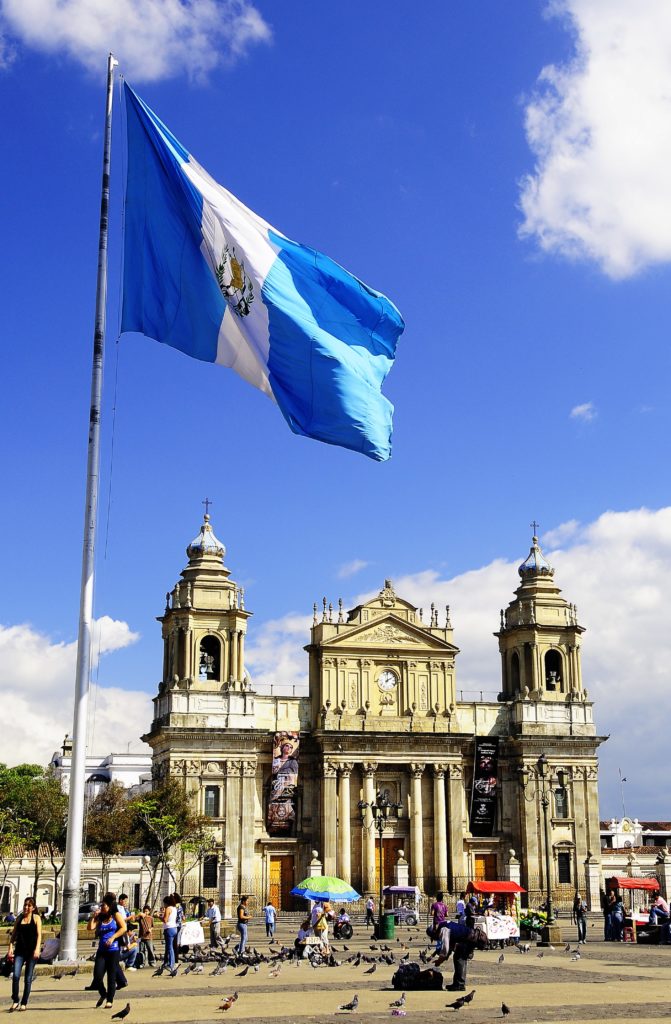
Guatemala-United States
The Dominican Republic-Central America-United States Free Trade Agreement (CAFTA-DR) was signed in 2004 by the United States, the Dominican Republic, and five Central American countries (Costa Rica, El Salvador, Guatemala, Honduras, and Nicaragua). The Agreement went into effect in Guatemala on July 1, 2006, after the country fulfilled all of the required commitments. As of January 1, 2015, all U.S. consumer and industrial goods are duty-free in Guatemala. Additionally, virtually all textile and garment products that meet the Agreement’s origin conditions are duty- and quota-free when entering Guatemala. Almost all agricultural exports from the United States are duty-free in Guatemala under CAFTA-DR. Guatemala will get rid of the last of its tariffs on rice by 2023 and dairy products by 2025. Guatemala eliminated its quota-exempt tariff on chicken leg quarters five years early in 2017.
Guatemala-UK
On July 18, 2019, Central America and the United Kingdom inked a free trade deal that took effect on January 1, 2021.
Free trade agreement between Taiwan and Guatemala
The Guatemala-Taiwan free trade agreement, which went into effect in 2006, is principally centered on the extension of zero-tariff treatment for agricultural exports. Guatemala exports $40 million worth of goods to Taiwan and receives $90 million worth of goods. Guatemala’s principal exports are sugar and coffee. Tobacco, seafood (shrimp and lobsters), copper goods, plastic materials, and other items are among the Taiwanese exports to Guatemala. Furthermore, the free trade agreement permits Taiwanese businesspeople to invest in Guatemala and expand their businesses to the United States and other Central American countries. Guatemala is a member of the Central American Free Trade Agreement, so the latter is a possibility.
The Northern Triangle
To improve travel, trade, and investment in the region, the northern triangle of Central America has formed a single customs union. Guatemala, Honduras, and El Salvador are members of this region. This integrated economic bloc aspires to boost trade opportunities, improve regional security, and facilitate attractive tourism circumstances by promoting the free movement of people and products between the three countries. The three countries cover an area of more than 77,000 square miles and account for almost 60% of the population in Central America. Honduras and Guatemala signed their first bilateral agreement in June 2017. The countries’ gross domestic product (GDP) has increased by 1.4 percent and 1.2 percent, respectively, since the program’s adoption.
Trade ties between Mexico and Guatemala
The Northern Triangle Free Trade Agreement, which went into effect in 2001, covers Mexico, Costa Rica, Nicaragua, and the Northern Triangle. The primary goal of this agreement is to create a free-trade zone for all members. Guatemala imports US$1.63 billion from Mexico, accounting for about 12% of total imports.
Colombia and Guatemala free trade agreement
Colombia began negotiations with the Northern Triangle countries for a free trade agreement in 2006. Guatemala was the first country to sign a free trade agreement with Colombia in 2009. Colombia, as a close neighbor, is an appealing market for Guatemalan exporters. The developing country has Latin America’s third-largest economy and a growing middle class that appears to be looking for variety in the things offered to them.
Guatemala and the European Free Trade Association (EFTA)
In 2015, Guatemala and the European Free Trade Association inked a free trade deal. The goal of this agreement is to strengthen economic links and promote trade and investment between Guatemala and the EFTA countries (Iceland, Lichtenstein, Norway, and Switzerland). This expands Guatemala’s worldwide reach and provides incentives to trade, giving the country more options and alternatives in these markets.
World Trade Organization
Guatemala has been a member of the World Trade Organization (WTO) since July 21, 1995, and of the General Agreement on Tariffs and Trade (GATT) since October 10, 1991.
Guatemala – Trinidad, and Tobago
The Trinidad and Tobago – Guatemala Partial Scope Trade Agreement (PSTA) was signed on February 6, 2015. The agreement intends to improve economic connections between the two nations. Products covered include curry, chocolate, guava jams & jellies, peanut butter, hydraulic fluids, building bricks, and aluminum doors.
Guatemala- EU
On June 29, 2012, the European Union and Central America announced the signing of a new Association Agreement. The Association Agreement is built on three complementary and equally significant pillars: political discussion, cooperation, and trade, all of which strengthen and reinforce each other’s effects. These are the tools that Central America needs to support economic growth, democracy, and political stability. The Association Agreement’s trade pillar has been in effect with Honduras, Nicaragua, and Panama since August 1, 2013, Costa Rica and El Salvador from October 1, 2013, and Guatemala since December 1. Vegetable goods; Optical and photographic instruments, etc.; Foodstuffs, drinks, tobacco; Animal or vegetable fats and oils, in order of significance. By HS section, the following are the most important EU exports to Central America: Chemical or related industry products, machinery and appliances, transportation equipment, foodstuffs, beverages, and tobacco