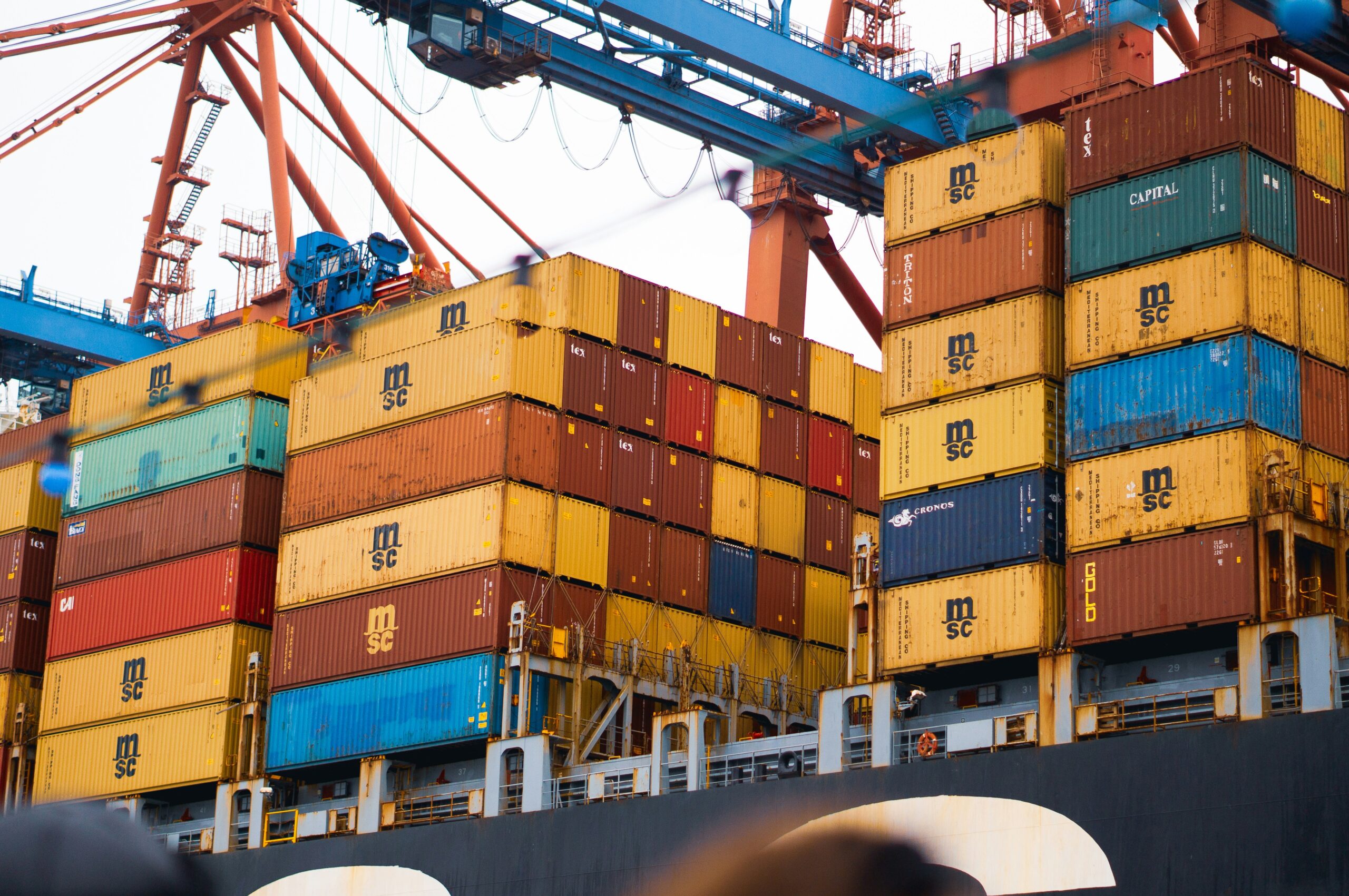
The Czech Republic has a highly open and globally involved economy, as evidenced by significant levels of net and value-added trading and incoming investment. The Czech Republic exports over half of its economic growth (GDP). In the Czech Republic, overseas funding provides nearly a quarter of all commercial market jobs.

Economic overview
Czech commerce, like that of many other European nations, plummeted during the international economic meltdown and then again amid the euro recession. In the years leading up to the crisis, Czech economic expansion was greater than the OECD average, and this trend was maintained post-crisis, but to a lower level. Export growth, on the other hand, dropped to 3.2 percent in 2016.
In 2016, gross exports totaled USD 156 billion, while gross imports totaled USD 141 billion.
Trade agreements
The Czech-Slovak Customs Union, the EU Association Agreement, the Central European Free Trade Agreement, and free-trade agreements with Latvia are the trade agreements that enhance the Czech economy.
These trade agreements are further discussed below:
Czech-Slovak custom union
The Customs Union Accord was established on October 29, 1992, and went into effect on January 1, 1993. It is a piece of a much larger set of treaties and frameworks that the Czech Republic and the Slovak Republic have established.
Trade, public administration, monopolistic tendencies, government assistance, and intellectual property rights security are all addressed in the Customs Union Treaty. These measures are intended to provide an equitable political and financial environment for both parties’ market participants.
Furthermore, the Customs Union Contract contains basic measures on business in services that guarantee free trading between the participants in that area. It establishes the Customs Unions’ legal structure.
The Customs Union’s goal is to secure free circulation of offerings, financial interdependence, and fiscal policy coordination among Participating Countries, as well as to create an ideal environment for economic cooperation between the Trading Bloc and third nations. According to the agreement, the abolition of customs taxes and numerical constraints will facilitate the free flow of products and offerings between the two Parties Involved. Furthermore, because import taxes received by each Contracting Party go to their separate budgets, the economic demands of the Customs Union will be met by funds from both Signatory Nations.
Central European free trade agreement
The establishment of the Central European Free Trade Deal is a significant step forward in the region’s efforts to collaborate closely on industrial issues. The research looks at CEFTA’s history and issues, as well as its role in pushing countries closer to EU membership. The need to ensure full coherence between the ambition to join the European Union and the necessity to promote the rapid expansion of trade liberalization in central Europe is stressed in the paper.
This deal’s main goal is to globalize intra-regional trading. Through the progressive adoption of free trading for manufacturing items, the agreement envisions eliminating tariffs, comparable hurdles, and non-tariff hurdles. In the case of agricultural products, it was determined to give reciprocal preferences exclusively for specific commodities in limited amounts.
The CEFTA, like other trade pacts, allows for the implementation of measures aimed at safeguarding the domestic market, industry, and commercial interests. It describes the circumstances in which such actions can be taken or withdrawn, as well as the conditions under which they can be taken.
Czech Republic-Republic of Latvia free trade agreement
In 1995, the nations ratified the treaty. Following the treaty’s terms, the parties will create a free trade zone covering all of their bilateral trade essentially.
The major goal of this agreement is to encourage the advancement of economic engagement in the Countries, as well as improved living and work circumstances, enhanced efficiency, and fiscal stability through the rise of bilateral trade.
It also attempted to create level playing fields for trade between the countries and eliminate trade barriers.