The Aruba export of goods involves abiding by local and International regulations. Here’s a comprehensive guide to help you navigate the process:
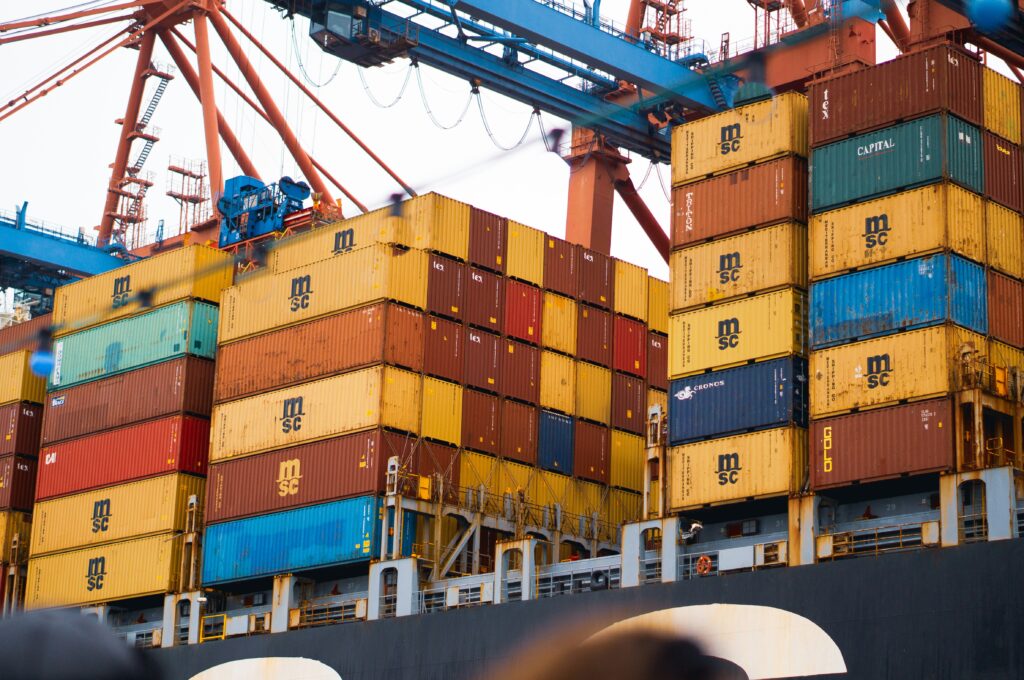
Research and identify export opportunities
First, you need to identify target markets that want to buy your products. To gain market insights, take advantage of things like the Aruba Chamber of Commerce (KvK Aruba) and the Caribbean Export Development Agency (CEDA). Product suitability: Look at how your product will stack up in international markets, culturally, quality-wise, and competitive pricing-wise.
Register your business
Register your business with KvK Aruba and ensure that you have your business permits for export activities.
Export Licensing
Some goods may need an export license, or other permits, such as for controlled or restricted goods (for instance pharmaceuticals, chemicals, endangered species).
Customs requirements
The Aruba Customs Department has its own rules to follow. Harmonized System (HS) is the classification of products in Aruba.
Trade agreements
Use of trade agreements that Aruba benefits from in the Kingdom of the Netherlands, i.e. agreements with the European Union (EU) and with CARICOM.
Prohibited and restricted items: Your product needs to be sure that it doesn’t fall into prohibited categories or require special permissions.
Product Preparation
Packaging and Labeling: Packaging and labelling compliance with international standards (language and safety requirements). This means that in some markets, sustainable packaging should be used to meet environmental regulations.
Quality standards: Be sure your products comply with international standards such as ISO for example, or HACCP (link for food products) or CE (link for European markets).
Shipping methods
Choose air freight or sea freight depending on how the goods are and cost-wise.
Freight Forwarders: Most of the time, it is wise to hire a freight forwarder or shipping agent to properly accomplish movement, customs handling, and documentation.
Insurance
Take transit insurance to cover your goods while in transit.
Export documentation preparation
Key export documents include:
- Commercial Invoice: details the transaction.
- Bill of Lading (BOL) or Airway Bill: Serves as proof of shipment.
- Certificate of origin: It ensures the origin of the product.
- Packing list: Lists item descriptions, quantities, and packaging, and assigns this information to a list on Amazon.
- Export License/Permit: For specific goods if necessary.
- Insurance certificate: Confirmed coverage during transit.
Financial arrangements
Payment Methods: Negotiate the security of Letters of Credit (L/C) (or advance payment) so that we reduce the financial risk.
Currency exchange
Manage foreign exchange risks by tracking currency moves.
Tax incentives
Learn about export tax exemptions or incentives in Aruba.
Customs clearance
Document Submission: All required documents should be submitted to the **Aruba Customs Department.
Customs Inspection: Inspection of goods requiring special permits or certificates is possible.
Shipping and delivery
Track shipment: Make sure to monitor your shipment to see that it arrives on time and resolves it quickly.
Delivery confirmation: Then receive confirmation from the importer and address post-delivery concerns.
Post-export procedures
Customer feedback: Collect feedback from international customers to refine any processes and improve product offerings.
Record-keeping: Have detailed records of all export transactions for legal and tax (etc.) purposes.
Expand markets
If you’ve undertaken an initial export, use insights from that experience to explore new markets or to add new product lines.
Aruba’s highest complexity exports, measured by the product complexity index (PCI), are Machines, calendering or other rolling machines, other than metal or glass, hand tools. (including glaziers’ diamonds) n.e.c.; blow lamps; vices, clamps etc, other. Reagents. diagnostic or laboratory reagents on a backing prepared diagnostic or. (PCI 1.5) PCI 1.45 is the knowledge intensity of a product measured by PCI which defines the knowledge intensity of a product in terms of a product’s exporters’ knowledge intensity.
You may also find these articles helpful
Foreign diplomatic relations of Aruba
Exporting goods from Qatar – full guide
Exporting goods from Russia – full guide