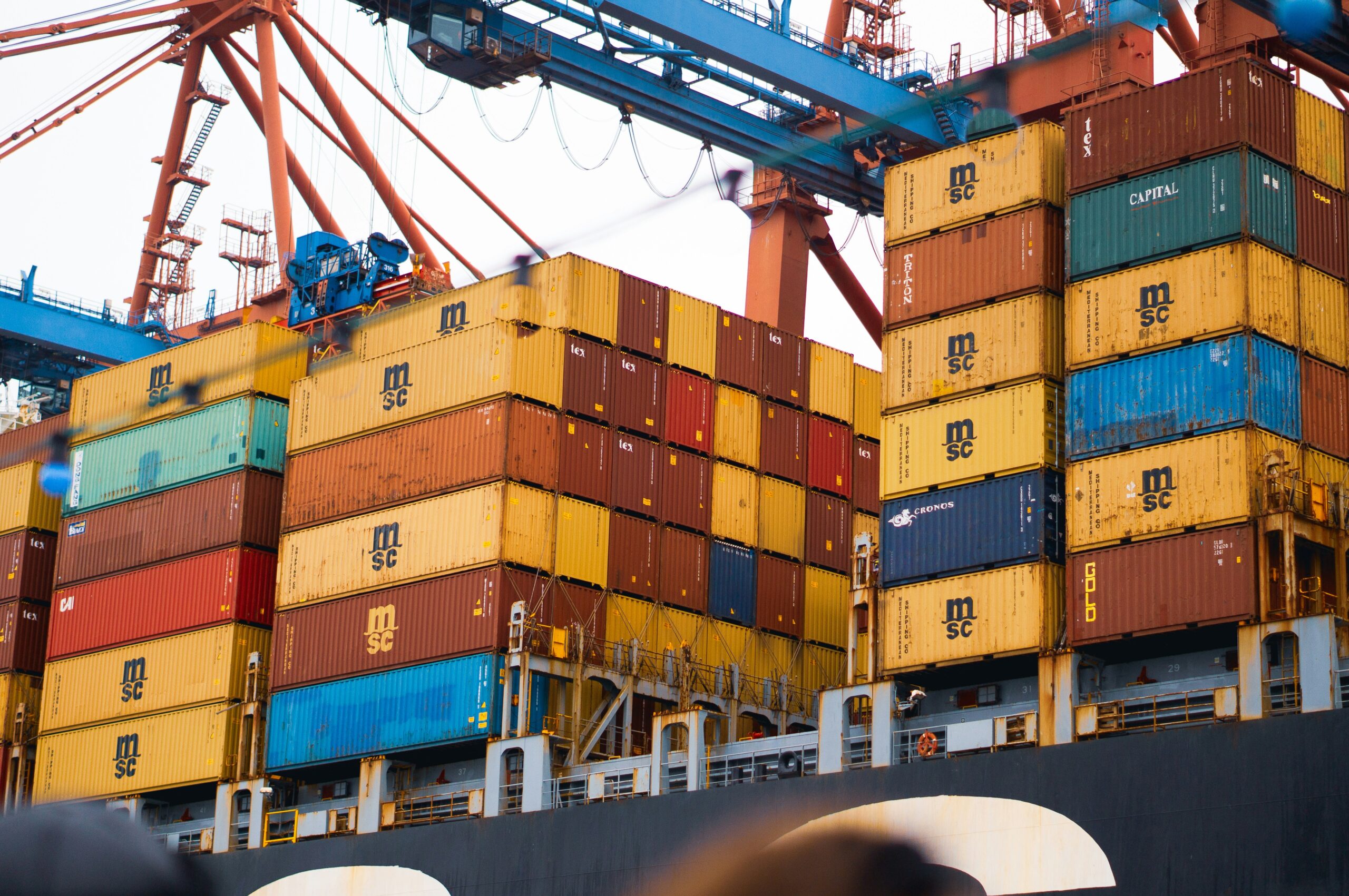
Poland imposes the Common Customs Tariff (CCT) on imports from non-EU nations, same as the other EU members. This implies that regardless of whether products are arriving via France, Germany, or Poland, customs duties are the same across the EU. The product’s categorization under the Harmonized standard (HS) Code, a globally accepted standard for classifying items, determines the tariff rate. While agricultural items, textiles, and some consumer goods may be subject to higher tariffs, industrial goods, equipment, and electronics often have low or nil duty rates.

Preferential tariff rates may be applicable to commodities coming from nations having trade agreements with the EU. As long as qualifying items fulfill the criteria of the rules of origin, these agreements provide lower or zero-duty rates. These agreements with the EU are set up with nations including South Korea, Japan, and Canada (under CETA), and they give discounted import costs to organizations working with these nations.
Value-added tax on imports (VAT)
VAT is imposed on completely imported items entering Poland. It is determined by adding up all of the items’ expenses, including shipping, insurance, and customs taxes. For the majority of imported items, Poland’s typical VAT rate is 23%. Nonetheless, lower VAT rates are advantageous for certain sectors. Books, medical supplies, and necessary food items, for instance, may have lower rates of 5% or 8%. Unless the importer is a firm that is registered for VAT and is eligible for deferred payment, VAT is due at the moment of customs clearance. For certain importers, Poland offers a VAT deferral program that enables them to include VAT in their tax returns instead of paying it all at once. For companies who import on a big basis, this may greatly enhance cash flow.
Excise taxes on particular items
Poland levies excise taxes on certain commodities, especially those that have to do with environmental and public health issues, in addition to VAT and customs charges. Products including gasoline, energy products, alcohol, tobacco, and some luxury goods are subject to excise taxes. These fees, which differ according on the kind of goods, are assessed in addition to VAT. For instance, tobacco goods are charged per unit, while alcoholic drinks are taxed according to their alcohol content. In an effort to reduce carbon emissions, environmental taxes are also applied to fuel imports.
Customs clearance and necessary records
Polish imports must go through a formal customs clearance procedure. The import technique is administered by Polish Customs (Służba Celno-Skarbowa), which requires merchandise coming into Poland from non-EU countries to be revealed. A business receipt illustrating the item’s depiction, worth, and place of origin is among the fundamental desk work that shippers should give. While a declaration of beginning can be required to have been qualified for particular exchange taxes, a bill of filling or air waybill is expected as proof of transportation. For prohibited items like chemicals, guns, and medications, additional licenses or permissions could be needed.
The Automated Import System (AIS) is used to handle import declarations in Poland’s heavily digitalized customs system. By streamlining the clearing procedure, this technology enables quicker and more effective trade operations.
Imports and exemptions from duty
Under certain circumstances, certain products are allowed duty-free entry into Poland. Because Poland is a member of the EU single market, goods imported from inside the EU are exempt from customs tariffs. Additionally, VAT is still applicable but customs taxes are waived for small shipments under 150 EUR. Travelers’ personal belongings are likewise duty-free as long as they are carried in in certain quantities. Under some EU investment initiatives, companies that import machinery and equipment for industrial production may be eligible for reduced or zero tariffs.
Challenges and considerations for importers
There are several difficulties when importing into Poland, especially for companies that deal with high-tariff commodities like luxury goods, textiles, and agricultural products. It may be difficult to comply with EU rules; importers must keep up with changes to trade agreements, VAT laws, and tariffs. Even with the growing digitization of customs operations, insufficient or inaccurate paperwork may still cause delays. Because Poland uses the Polish Złoty (PLN) instead of the Euro, currency swings provide another difficulty. This might have an influence on import prices for companies that deal in other currencies.
Despite these obstacles, Poland is a desirable site for international commerce due to its advantageous Central European location and advanced infrastructure. Poland’s effective transportation systems and expanding economy make it a popular destination for companies looking to distribute products within the European Union.
You may also find these articles helpful
Exporting goods from Sao Tome and Principe